Why Does Work Feel More Exhausting in the AI Era?
 Tino
Tino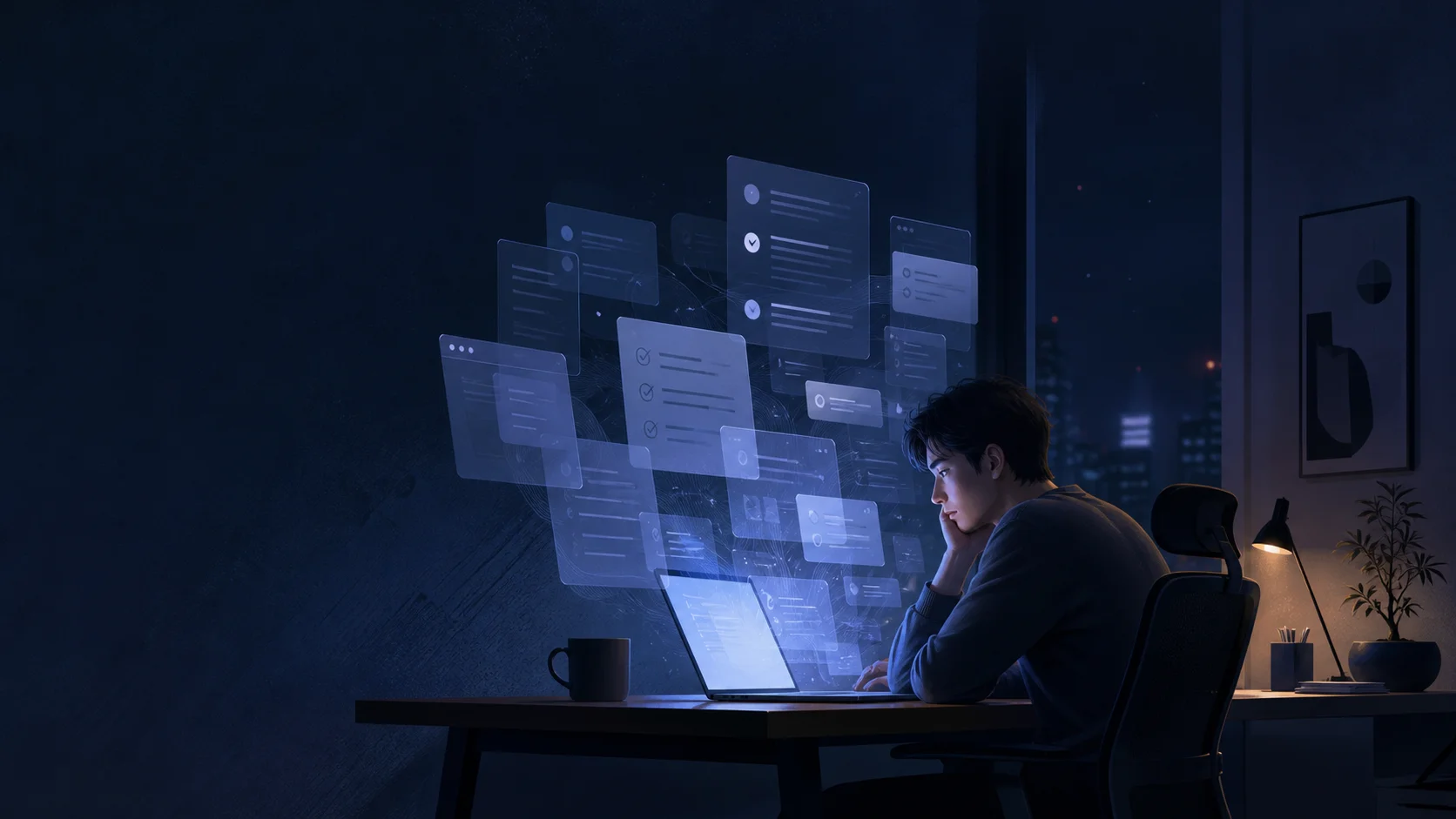
When people first talked about AI, the picture was usually pretty nice: hand the repetitive, fiddly work to a machine, grab a coffee, and spend our time on things that actually matter—or at least feel more creative.
Lovely idea. But once AI enters the workflow, plenty of people have the same first reaction: wait, why am I more tired? Requests arrive faster, first drafts appear faster, and feedback follows right behind. What used to involve waiting for people, research, and conversations can now go through several rounds in an afternoon—or even an hour.
The machine has loosened a few screws for us. It has not, however, given us much more time to stare out the window.
1 The blocker used to be a person. Now it is AI.
Work used to come with plenty of natural red lights.
The designer was in a meeting. The product manager was still clarifying the brief. Engineering was waiting for an API. The writer was waiting for source material. Yes, those things slowed projects down, and sometimes they were maddening. But they also stopped work from accelerating forever. At 11 p.m., you probably would not ask a colleague for three polished options on the spot—you know they need sleep, and they cannot stay online like a customer-service bot.
Now, AI can handle the first deliverable in many parts of the process:
- Need a draft? You can have one in minutes.
- Need a prototype, a script, or a research outline? It is there almost immediately.
- Need meeting notes turned into action items? They can be ready before the call ends.
- Need ten more versions? That no longer means ten rounds of actual human effort.
The old blockage was “we are waiting for someone to be free.” The new one is “should we ask AI for one more version?” AI does not go home, say it is too tired to think, or remind you that it has been working for ten hours straight.
With fewer red lights, work starts to feel like a conveyor belt. AI is on standby 24/7, so people can quietly be expected to be on standby too.
2 If we are more productive, why are we not more relaxed?
It is tempting to think that better efficiency should mean shorter workdays. In practice, the opposite often happens. Once output gets faster, expectations rise with it—like a game whose difficulty setting was just turned up.
One proposal a week can become three. A discussion that once took two days can turn into, “If AI can produce a first draft, why can’t we see it today?” An 80-percent solution used to be enough. Now that revisions are cheap, the questions keep coming: Can it be more precise? More complete? Could we try another angle?
That does not mean everyone suddenly became demanding on purpose. More often, what technology makes possible quietly gets translated into what people believe should be done.
The ten minutes AI saves rarely return politely to your day. The next task grabs them first. They get packed into more requests, more revision rounds, and tighter response times. Work has not necessarily increased; every square on the calendar has simply become more crowded.
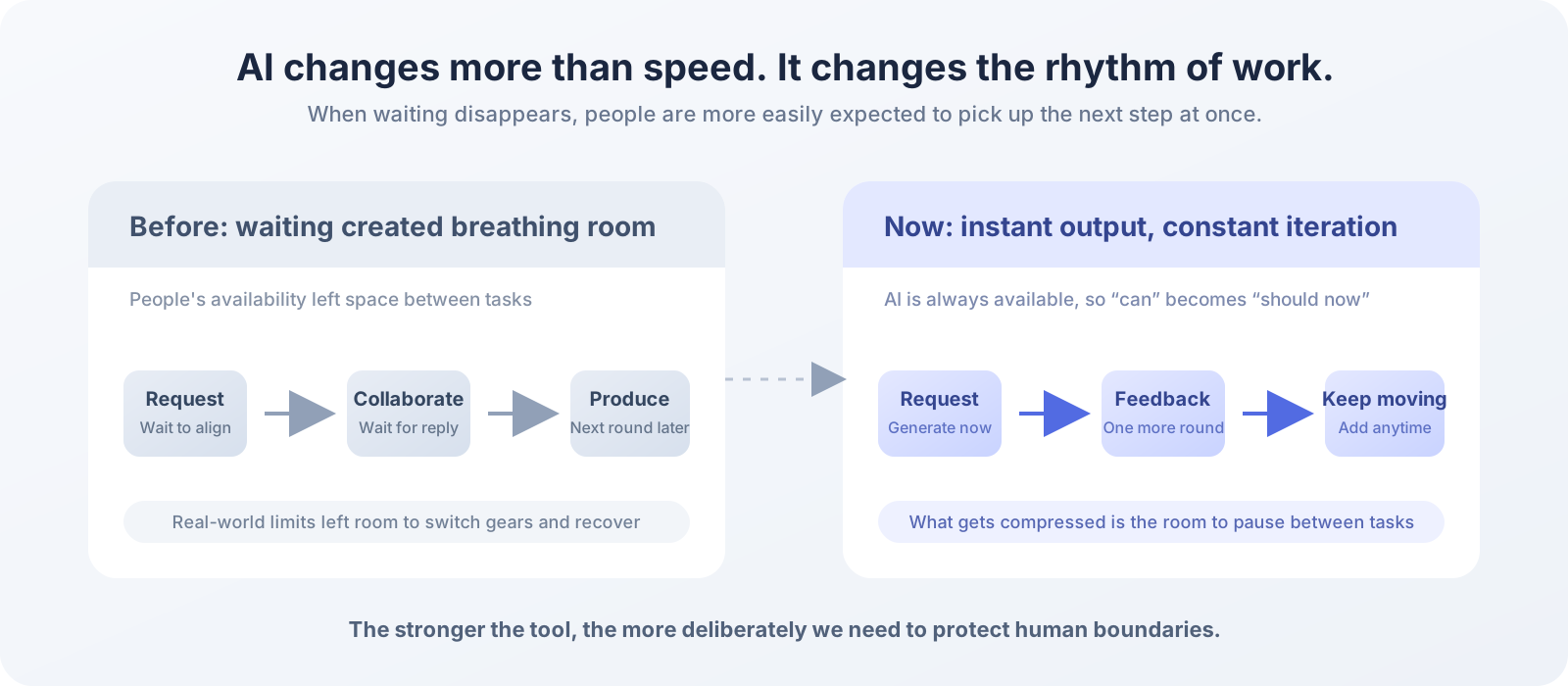
Waiting was not always inefficient. It was a little like the walk between two train lines: it produced nothing, but it gave you a moment to breathe and switch gears.
3 What gets squeezed out is the empty space
What really wears people down is often not that one task is unbearably hard. It is that there is no gap between one task and the next.
When you used to wait half a day for a reply, you could move to something else—or put the whole thing aside for a while. Now AI keeps placing the next step in front of you: the research is summarised, the code is generated, the email is polished. It is like someone quietly setting new plates on your desk. None of them is huge, but they never stop arriving.
That feeling of “I could always do just one more thing” is a lot like an endless social-media feed. Nobody may explicitly ask you to work late, but you start thinking: the tools are right here, so should I quickly deal with one more thing?
Over time, rest stops being what naturally happens after work. It becomes something you have to reserve and protect—the one hour in your calendar that is easiest for someone else to take.
4 AI should not become the new nagging voice
None of this means we should reject AI. It can remove a lot of pointless friction and help small teams do things that once felt out of reach. It is a bit like a very capable kitchen appliance: use it well and dinner comes sooner; use it badly and everyone just orders more dishes.
But if a team adopts AI only to double output, compress every response into “right now,” and stretch everyone’s standby hours, then the thing being optimised away is not the process. It is people’s breathing room.
Perhaps we need to deliberately add back some of the boundaries that real-world limits used to provide:
- Separate “can be generated immediately” from “must be delivered immediately.”
- Set limits, priorities, and stopping points for reviews and revisions.
- Do not treat an instant reply to a non-urgent message as proof of commitment.
- Be clear about what can wait until the next working day.
None of that sounds especially technical. Yet it determines whether AI gives people time back—or turns them into operators waiting beside the machine to click “generate again.”
5 What really needs optimising is human availability
The pressure of the AI era is not that machines work harder than people. It is that “we can do this right now” has become far too easy. But work is not only about producing an output. People need time to judge, absorb, recover, and exist without replying to something immediately.
AI can run around the clock. That does not mean people should be expected to keep the green light on around the clock too.
The more capable the tool, the more we should ask: did the time it saved actually return to life? Or did the next task simply grab it early?